 4 MIN READ
A design-led look at why homeowners are moving away from minimalist towel rails toward sculptural electric towel warmers—and what to compare before choosing one.
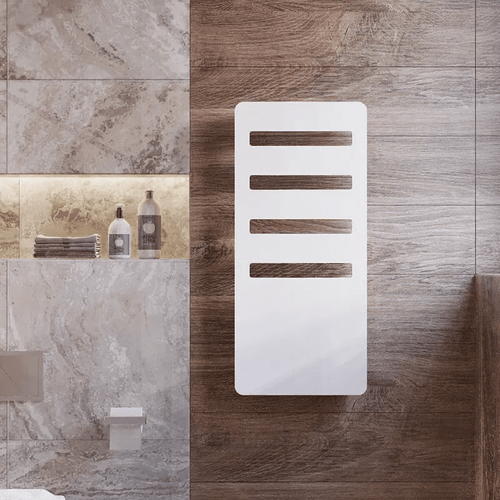
Minimalist towel rails are safe. They're also forgettable. A growing number of homeowners are choosing design with more tension—and more life.
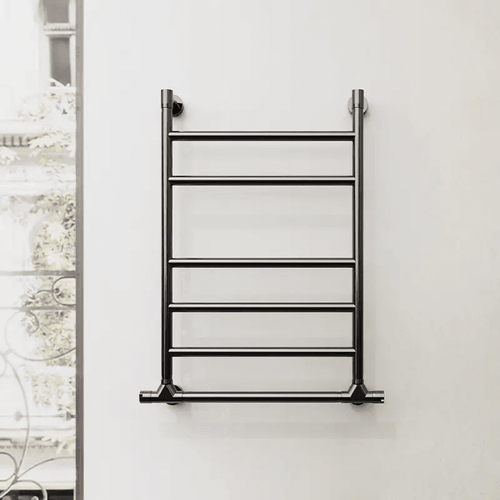
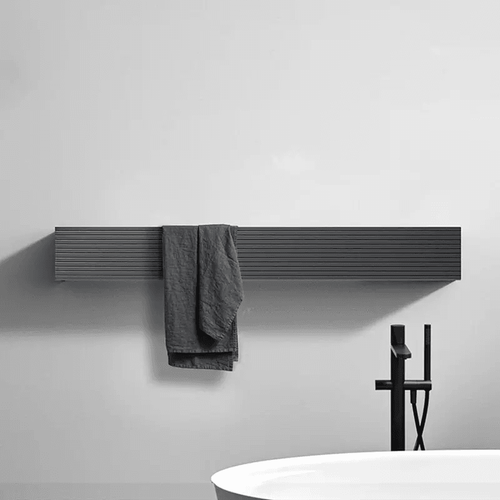
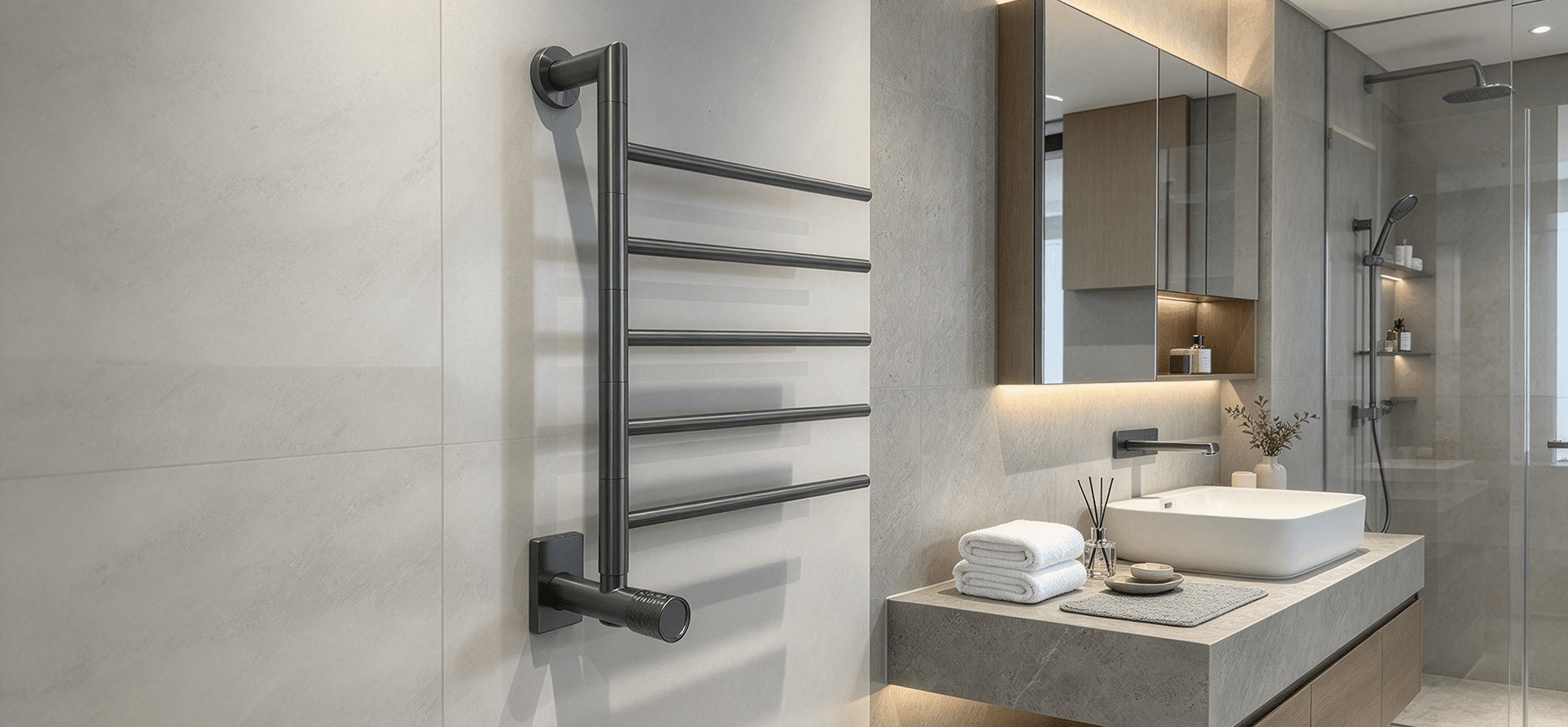
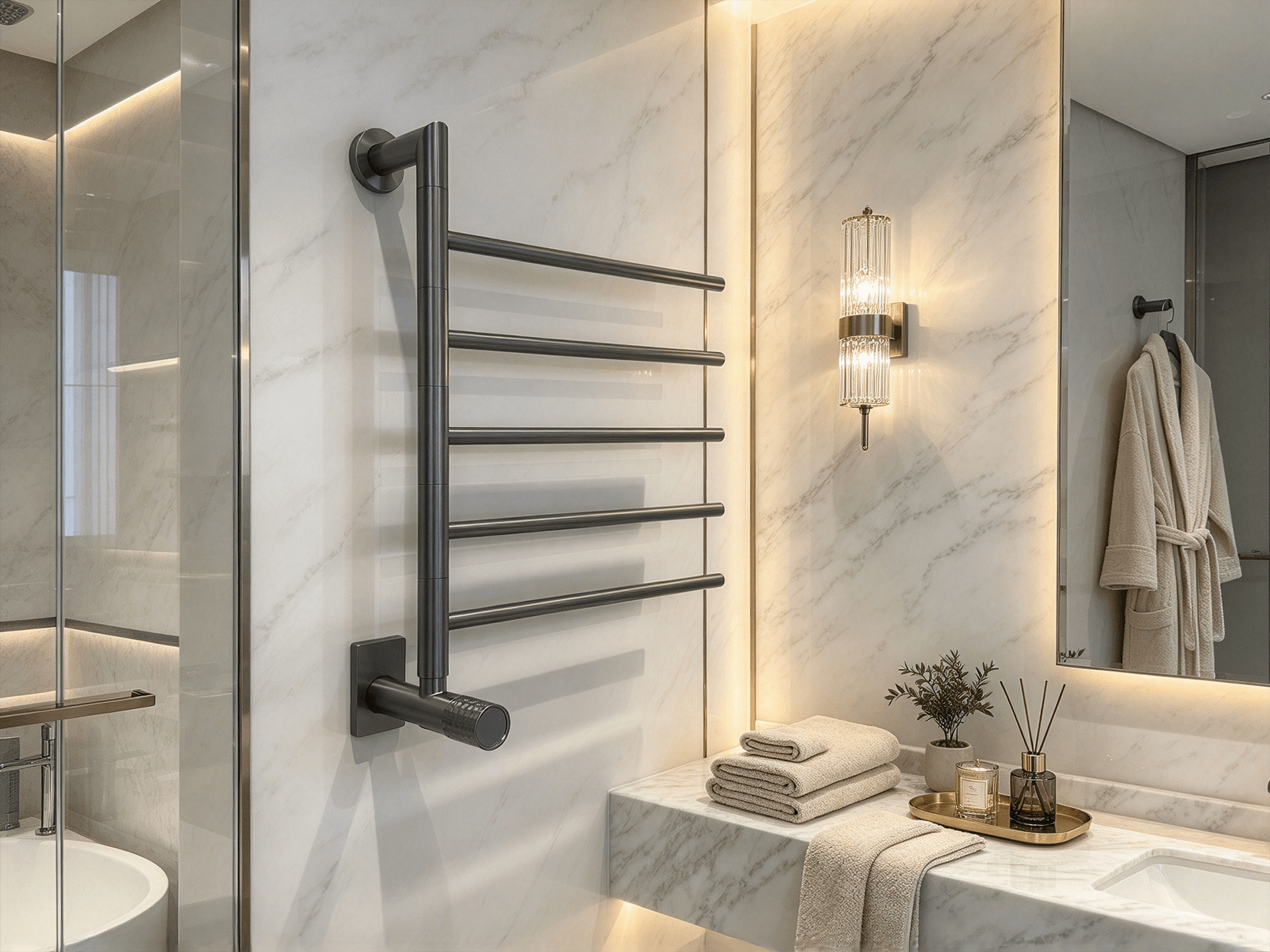
Walk through most high-end bathrooms and you'll see the same towel rail: straight lines, neutral finish, designed to disappear.
There's nothing wrong with that approach. It's safe. It's easy to specify. And it's exactly why so many bathrooms end up looking the same.
A different school of thought is gaining ground—one where the electric towel warmer isn't hidden but treated as a design decision. Not a fixture you tolerate, but a piece that gives the room its character.
The minimalist default, and its limits
Minimalism has dominated high-end bathroom design for years, and for good reason. Clean lines age well. Neutral finishes are easy to live with. A restrained towel rail won't fight with anything else in the room.
But restraint has a cost. When every element is designed to disappear, nothing anchors the space. The bathroom feels assembled rather than composed. You can spend a fortune on tile, stone, and fixtures and still end up with a room that has no focal point.
That's the gap sculptural towel warmers fill.
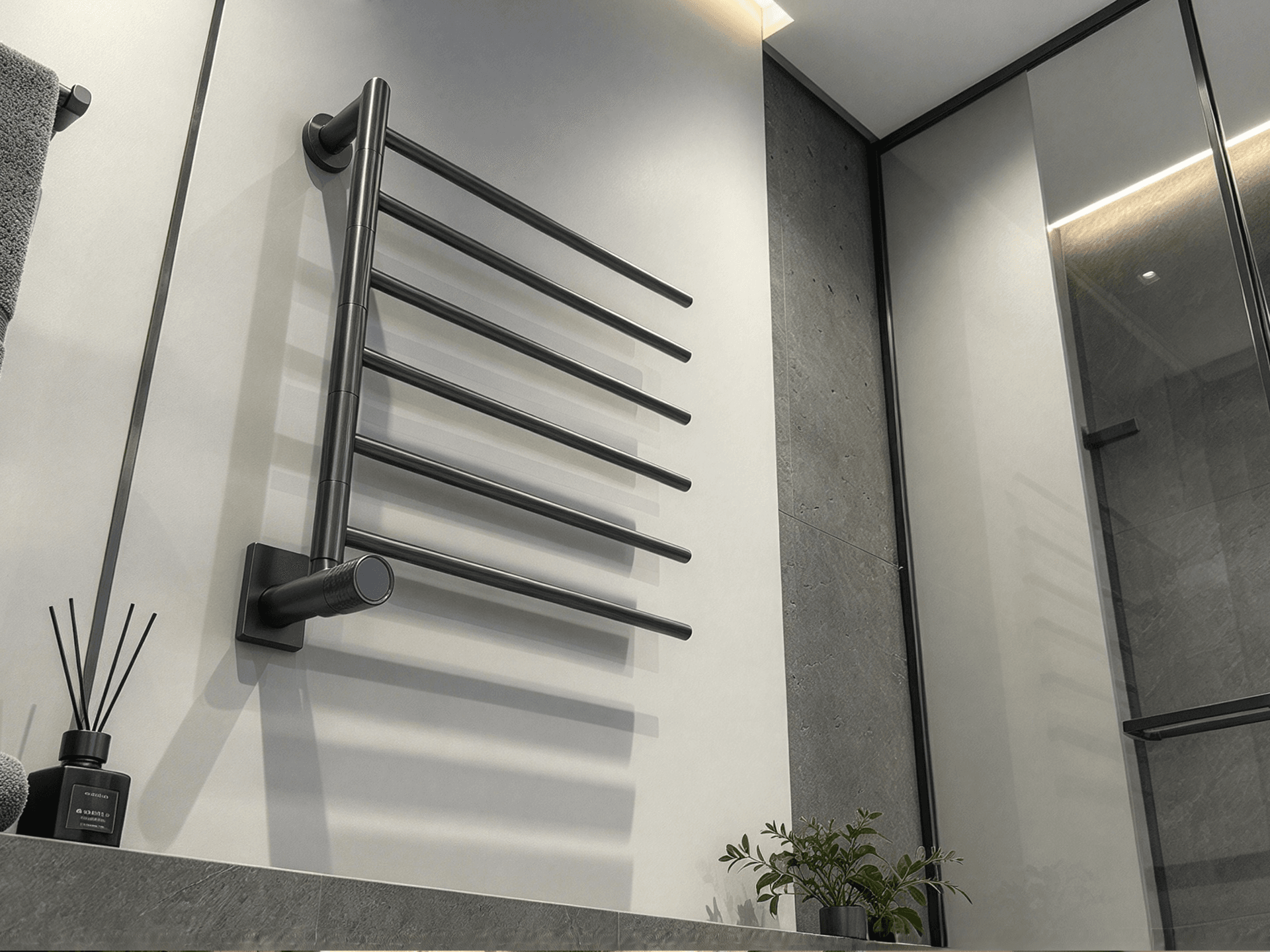
What "sculptural" actually means
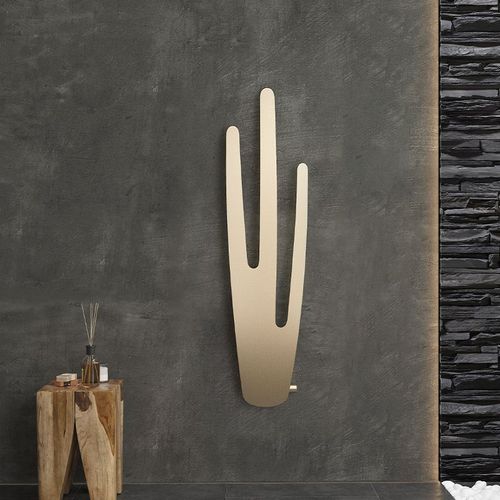
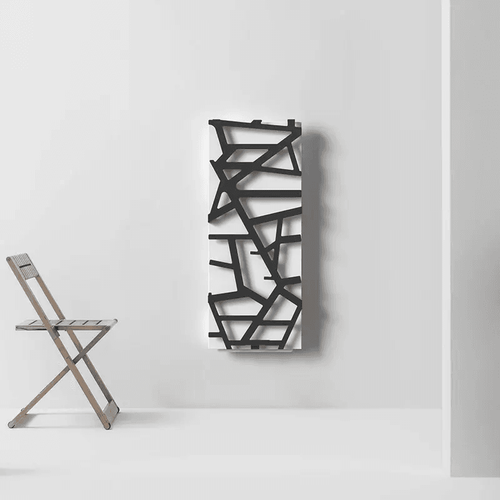
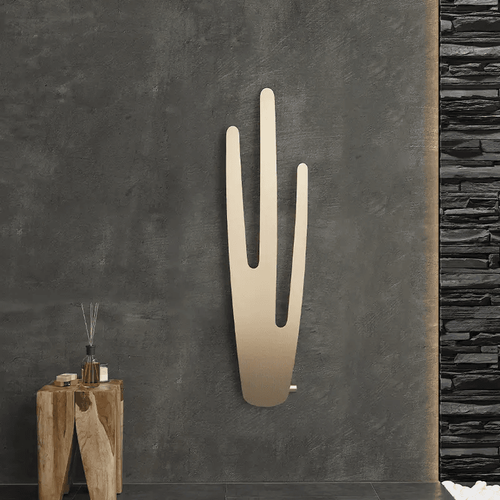
Sculptural doesn't mean loud. It means the form itself carries the design—the way a piece of stone or a bend in a river carries visual interest without decoration.
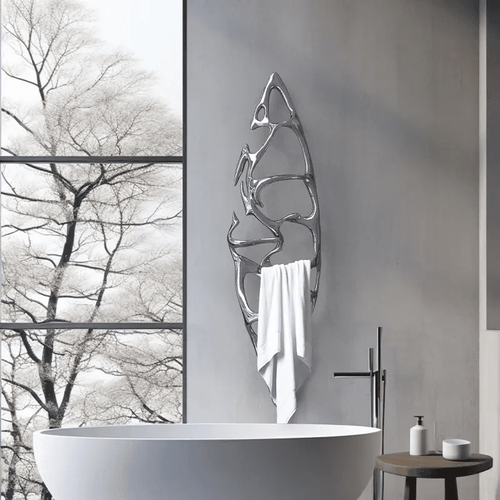
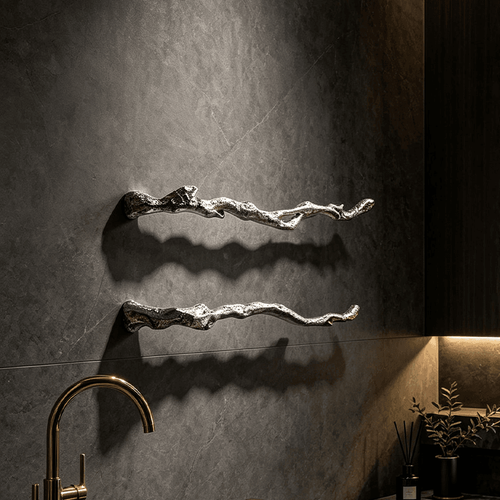
P&Bhusri's approach draws from natural elements: mountains, rivers, streams, rocks, weathered stone, karst landscapes. Those references shape the silhouette of each piece rather than being applied as surface pattern.
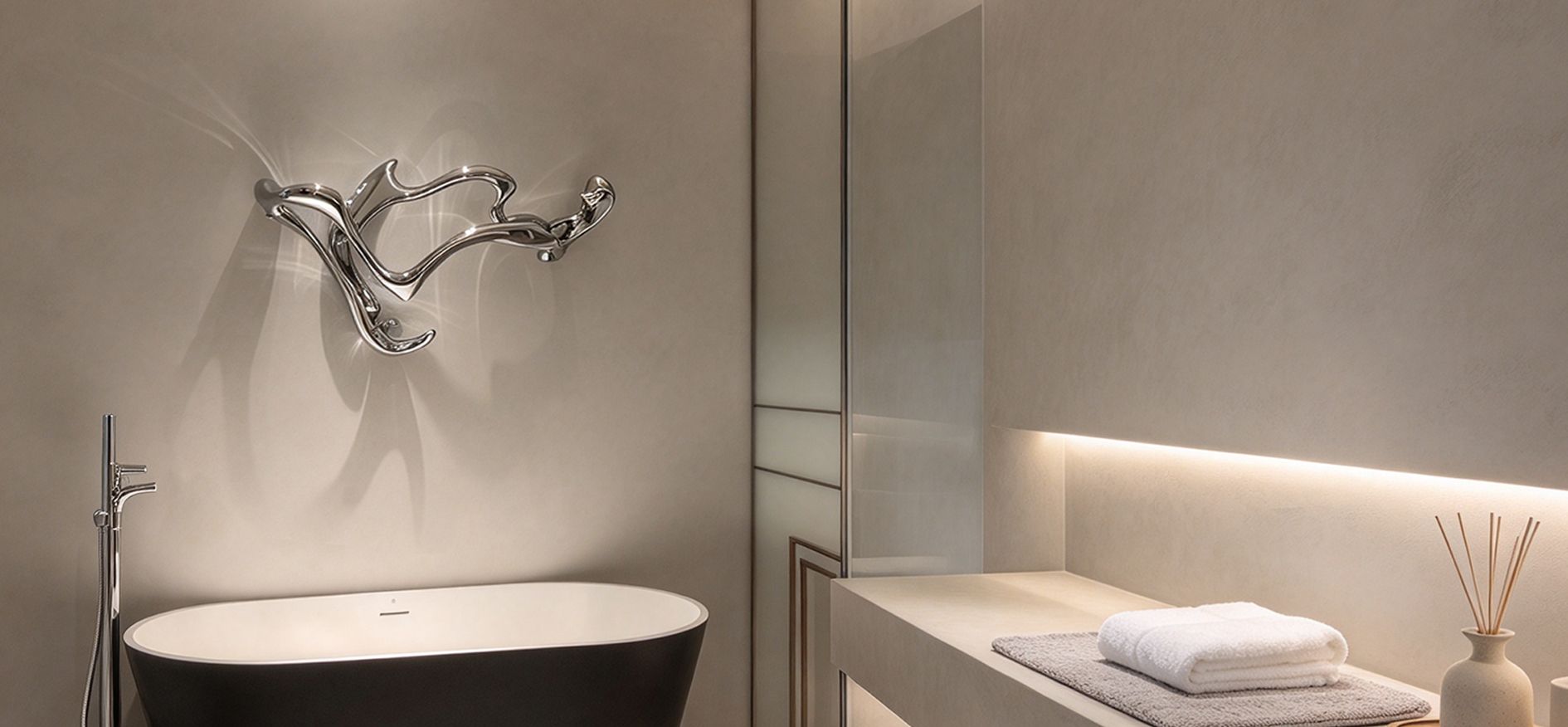
The Eternal Spring series is a clear example. Its shape resembles flowing spring water, bringing a sense of movement into a room that's usually static. The Master Series goes further, with stronger design tension, visual highlights, and a natural vitality that ordinary minimalism doesn't attempt.
Industry professionals often describe the result as functional art—pieces that dry and warm towels while holding their own as design objects.
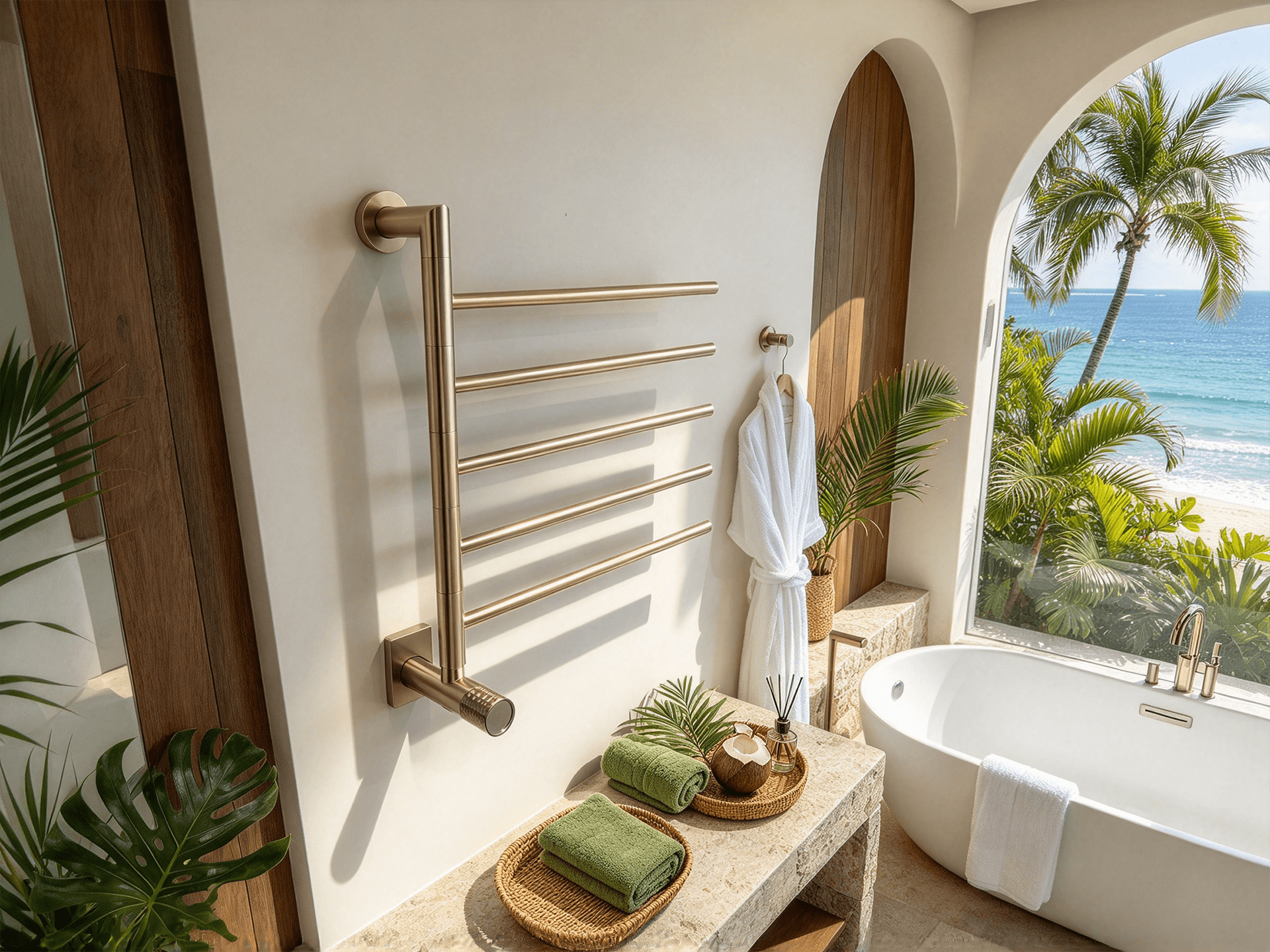
Why this matters in a real home
A bathroom is one of the few rooms where you're alone with the design every day. You notice the details—or the lack of them.
A towel warmer with a distinct form changes how the room reads. It creates a finishing touch that pulls the space together and gives it an immersive atmosphere. In a nature-first or eco-conscious home, that's especially true: organic forms and stainless steel sit comfortably alongside natural materials and a return-to-nature philosophy.
This is also where the comparison with high-end Italian brands gets interesting. Italian design has long set the benchmark for bathroom fixtures. But buyers comparing those brands against P&Bhusri often find that the design temperament is different—stronger sculptural presence, more natural vitality, less adherence to the minimalist default. For spaces built around natural forms rather than clean geometry, that difference is the deciding factor.
What to compare before you choose
If you're shopping in this category, these are the questions worth asking:
Form: Does the piece have a silhouette you'd notice if it weren't a towel warmer? Or is it a rail with a cord?
Design language: Does it follow the minimalist default, or does it bring something of its own?
Material and finish: Stainless steel and premium plating hold up in a wet bathroom. Check the finish options, including non-standard colors.
Fit with the room: A sculptural piece needs to belong. Consider whether the form matches the materials and mood of the space.
The full picture: A towel warmer rarely lives alone. Coordinating hardware—towel bars, soap dishes, basins—keeps the room coherent.
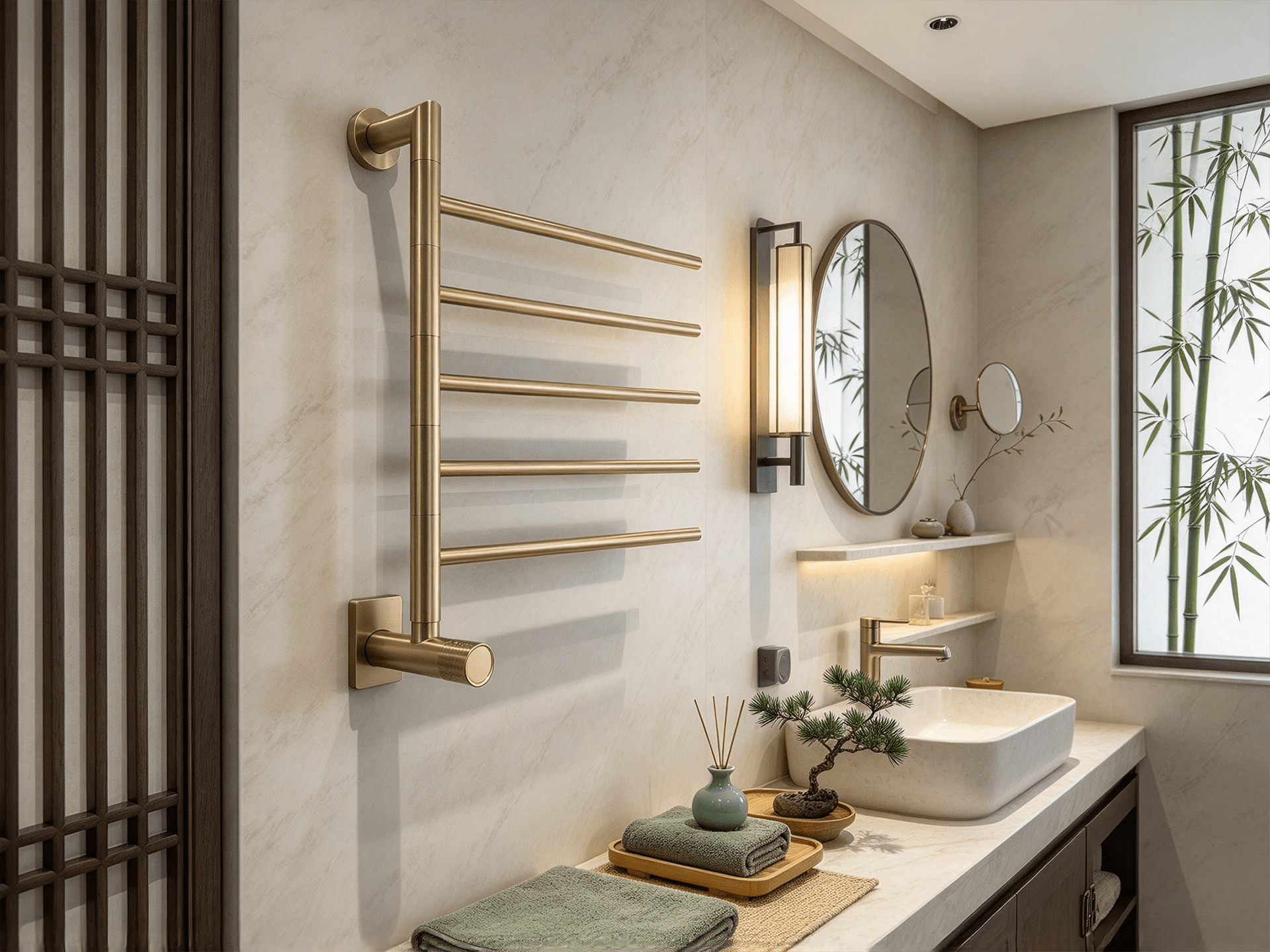
Minimalist towel rails are safe, but they leave bathrooms without a focal point.
Sculptural electric towel warmers treat form as the design, drawing from natural elements like mountains, rivers, and weathered stone.
Eternal Spring brings flowing, water-like movement; Master Series delivers stronger design tension and natural vitality.
Professionals call the result functional art—design that still dries and warms towels.
When comparing high-end Italian brands, the difference often comes down to design temperament and fit with the space.